Guide
How to Remove Smell from a Fridge with Lemon
Clear fridge odors with lemon and baking soda, find where smells hide in built-in refrigerators, and learn which smells point to a repair instead.
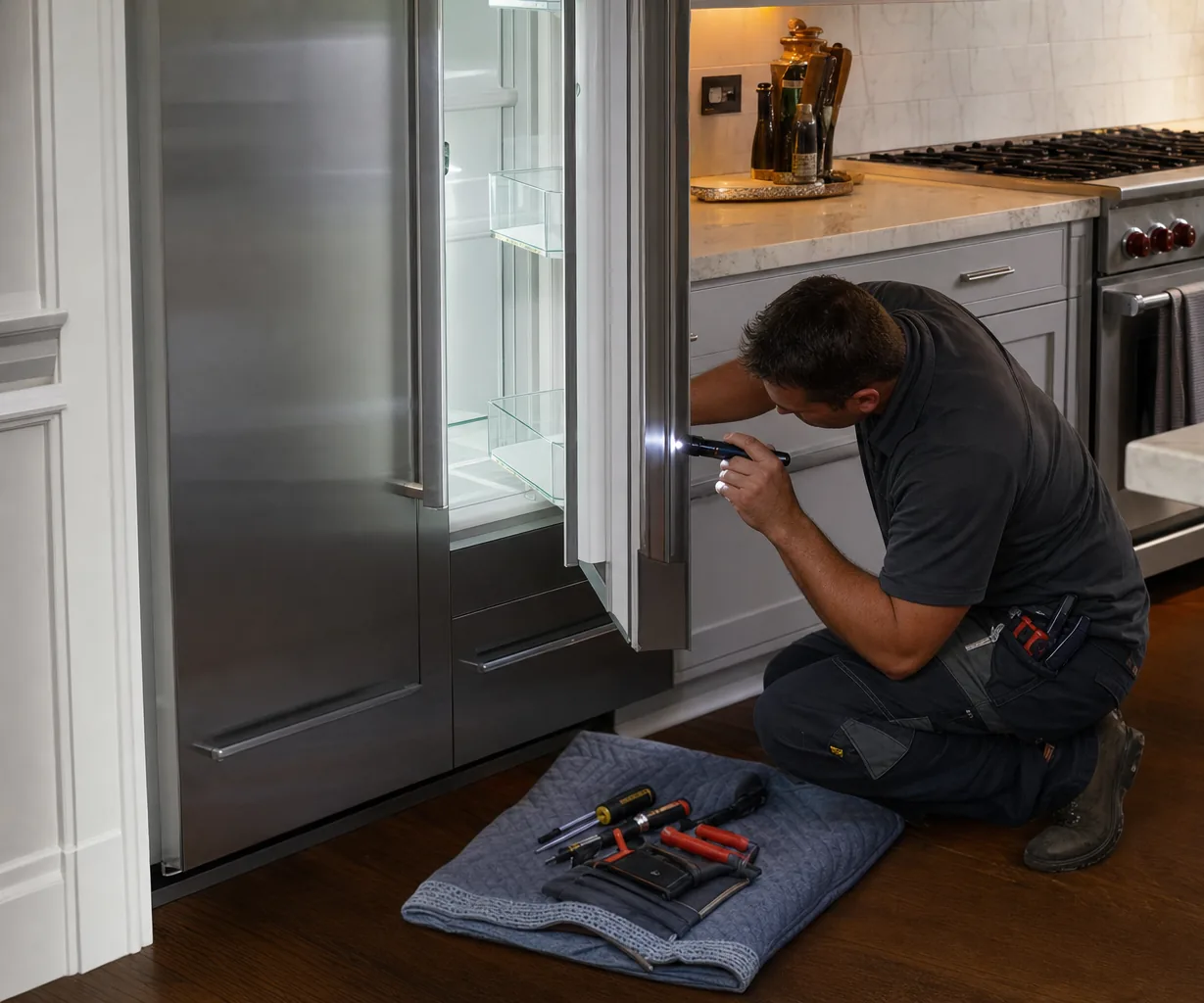
To remove a smell from your fridge with lemon, empty and wash the interior first, wipe every shelf with the juice of 1 lemon mixed into 2 cups of warm water, then set a halved lemon cut side up on a middle shelf and swap it out every 2 to 3 days. Lemon freshens and covers odors well, but it only works for good once the source is gone, so the cleaning matters more than the fruit.
Why does lemon help with fridge odors?
Lemon juice is acidic, and the peel is full of fragrant citrus oils. The acid lifts light film from shelves, and the oils leave a clean scent that masks what remains. That is the honest limit: lemon freshens, while baking soda neutralizes many sour odors and activated charcoal absorbs them. The most reliable natural approach uses them in turn: wash with soap, deodorize with baking soda, finish with lemon.
How do you remove smell from a fridge with lemon, step by step?
Plan on about 45 minutes. Keep perishables in a cooler with ice while the doors are open, since cold food should stay at 40°F or below and not sit warmer for more than 2 hours.
- Empty everything. Toss anything spoiled or past its date, and check the bottoms of jars; a sticky ring under a sauce jar is a common culprit.
- Pull out drawers and shelves. Most odors in a built-in live under the crisper drawers and in their tracks, not on the shelves you see.
- Wash. Use warm water with a few drops of mild dish soap, then rinse with a clean damp cloth.
- Deodorize. Wipe the interior with about 1 tablespoon of baking soda dissolved in a quart of warm water. Let cold glass shelves warm to room temperature before washing them so they don’t crack.
- Lemon rinse. Squeeze 1 lemon into 2 cups of warm water and wipe shelves, walls and drawers. Dry everything, because leftover moisture invites mildew.
- Set the lemon. Place a halved lemon cut side up in a shallow dish on a middle shelf. For a stronger effect, scoop out some pulp and fill the hollow with baking soda.
- Restock and replace. Return food in sealed containers, and replace the lemon every 2 to 3 days, before it dries out or molds.
Keep the lemon water off the door gasket. Sub-Zero’s gasket instructions call for mild detergent and water with a soft cloth, a baking soda paste for tough stains, or a 1:10 mix of bleach to water for mold or mildew, and they say to avoid vinegar and rubbing alcohol. Lemon juice is acidic like vinegar, so clean the gasket the gentler way.
Where do odors hide in a built-in refrigerator?
Built-in and column refrigerators from Sub-Zero, Thermador, Miele, Liebherr or Dacor have deep cabinets and separate compartments, so a smell can sit where you never wipe:
- Gasket folds. The pleats trap crumbs and moisture; a musty smell near the door is often mildew here.
- The ice bin. Ice absorbs odors. Dump the bin, wash and dry it, and let it refill.
- The water filter. An old filter can make water and ice taste stale. JennAir and KitchenAid both recommend replacing it about every six months, when the indicator comes on, or as needed.
- The air or deodorizer filter. Miele MasterCool refrigerators use Active AirClean filters, replaced about every 6 months when “Change Active AirClean Filter” appears. Dacor column refrigerators have a deodorizer filter with an 18-month life; after replacing it, hold Deodorizer Reset for 3 seconds. Liebherr Monolith models remind you every 6 months to change the water and air filters.
If your model has an odor filter and it is overdue, no lemon will match a fresh one.
Which fridge smells mean something more than old food?
| Smell or sign | Likely cause | What you can check | When to call a technician |
|---|---|---|---|
| Sour smell returns within days | Spill trapped under drawers or in a drain channel | Remove drawers, wipe the tracks and cabinet floor | If the area stays wet or the smell keeps returning |
| Musty smell at the door | Mildew in the gasket folds | Mild detergent, or a 1:10 bleach mix for mildew | If the gasket is torn or won’t seal (door gasket / seal replacement is typically $150–$450) |
| Stale-tasting ice or water | Ice absorbing odors, or an old filter | Dump the ice, replace the filter | If a fresh filter and new ice don’t help |
| Standing water under the crisper drawers | Blocked defrost drain or defrost fault | Look for frost on the back wall | If water or frost keeps returning (defrost heater / thermostat work is typically $320–$550) |
| Food spoiling fast | A cooling problem, not an odor problem | Leave a thermometer on a middle shelf overnight | If it reads above 40°F at your normal setting (common refrigerator repairs are typically $300–$750) |
| Hot or burning smell | Fan motor, wiring or a control part | Switch the unit off | Right away |
Sub-Zero notes that a refrigerator reading above 48 degrees while set at 38 is unlikely to recover from a condenser cleaning and needs service. Warm, smelly food in that case is a symptom, not the problem.
What should you avoid when cleaning a fridge?
- Perfumed cleaners on interior plastics. They leave their own odor, and food picks it up.
- Sharp tools on frost. If you defrost a freezer section, USDA guidance warns against ice picks, knives, other sharp objects and electrical heating devices, which can damage the inner lining.
- A week-old lemon. A shriveled or moldy lemon adds to the problem.
- A worn seal. ENERGY STAR advises making sure door seals are airtight and replacing them if not. A leaky seal lets humid air in, feeding condensation and mildew.
That matters on the Great Neck peninsula, where Manhasset Bay and Little Neck Bay keep summer air humid, and a worn gasket lets that moisture in all day.
When is the smell a repair, not a cleaning job?
If the odor returns within a day or two of a thorough cleaning and fresh filters, or arrives with water, frost or rising temperatures, the cause is likely mechanical. North Shore Built-In Repair is an independent service, not manufacturer-authorized, working on built-in refrigeration across Great Neck, Kings Point, Manhasset and Port Washington. A diagnostic visit is typically $95–$149; every figure here is a typical range, and the firm quote is given on site after diagnosis. See refrigerator repair, column refrigerators and repair pricing, or call (475) 264-6460.
Frequently asked questions
How long does a lemon take to remove fridge smell?
A halved lemon freshens a clean fridge within a few hours and works best over 1 to 2 days. Replace it every 2 to 3 days so it doesn’t spoil.
How do you remove smell from a fridge naturally?
Wash with mild soap and water, wipe with baking soda dissolved in warm water, and finish with a lemon-water rinse. An open box of baking soda or a dish of activated charcoal keeps absorbing odors between cleanings.
Is lemon better than baking soda for fridge odors?
They do different jobs. Baking soda neutralizes many sour odors while lemon mainly adds a fresh scent, so use baking soda to treat the smell and lemon to finish.
Why does my fridge still smell after cleaning?
The source is usually somewhere you missed: under the crisper drawers, in the gasket folds, in the ice bin or in an overdue filter. If it persists with water, frost or warm temperatures, have the refrigerator checked.